
Web Design Trend #14 • Asymmetric and
Broken Layouts

Zazzle Media, by Jamie Leeson

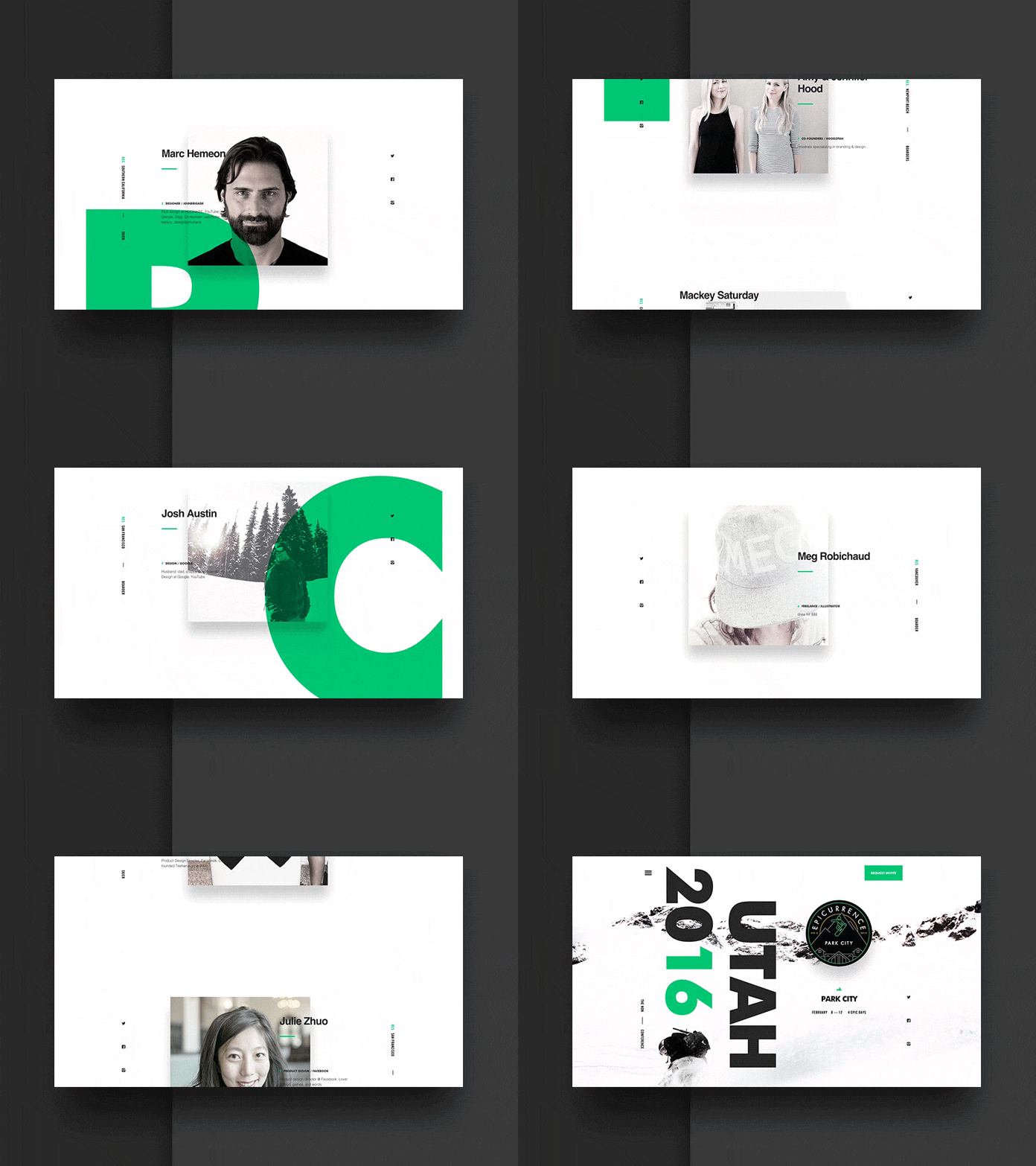
If 2016’s real emergence in grid exploration was anything to go by, we’re pretty confident that the coming year will see big developments in both asymmetrical and unconventional ‘broken’ layouts. Although brands and services which are heavily content-led may continue using card UIs and more traditional grid based structures to help efficiently organize and display their content, we anticipate an increase in the use of experimental layouts across the web as brands seek to create unique experiences which set them apart.
Read More >>

Web Design Trend #13 • Innovative Scrolling
and Parallax

Zazzle Media, by Jamie Leeson

Scrolling, once reserved for getting from top of a page to the bottom, is being used in more creative capacities to deliver content online. Where designers in the past were concerned about keeping the most important content ‘above the fold’, we’re seeing this old-fashioned notion disappear, as ‘the fold’ is now harder to define, as users are viewing content of screens of all different sizes and resolutions.

Scrolling is a versatile mechanic which (when executed well) can work great with all varieties of content delivery. It works with video based content, where large full screen videos play and pause as the user scrolls, as well as static content, which can animate, move, or change depending on the users input.

Parallax

Read More >>

Web Design Trend #12 • VR-Inspired Experiences

Zazzle Media, by Jamie Leeson

VR is definitely a hot topic for 2017, especially with more hardware manufacturers investing in the technology and producing headsets. See Oculus, Sony and HTC for some great examples of ones available to purchase right now.

Although the majority of these headsets are geared up for gaming and media consumption rather than web browsing, we anticipate seeing many brands attempting to mimic the VR experience online. Many brands are already creating more interactive solutions for web which directly involve the user. These experiences put the in the center of the action, viewing it all from a first person perspective and navigating it freely as if they were actually in the experience themselves.

Read More >>

Web Design Trend #11 • More Card and Grid UIs

Zazzle Media, by Jamie Leeson

We’ve previously touched on the rise of UI patterns, and although there are hundreds of which we could touch on, one which is seeing more and more across the web is the use of card-based UIs, a fundamental principle from Google’s Material Design.

Cards, made famous by Pinterest and then even more so by the likes of Facebook, Twitter, and Google are UIs where pieces of content (text, imagery, video) are broken down into individual ‘cards’ which the user is able to navigate through. Card UIs allow brands to show larger amounts of content on a screen at once, but in more manageable chunks, so users can quick scan to see what’s appealing to them and dismiss what isn’t.

Read More >>

Web Design Trend #10 • Courageous Colors

Zazzle Media, by Jamie Leeson

2016 is definitely the year for super-rich colors online. Whereas in the past, many brands and designers have typically stuck with web-safe colors, more brands today are being braver in their approach to using color, as we’re seeing with over-saturation, vibrant hues and a resurgence in the use of gradients. This in part is helped by technological advancements in monitors and devices with screens that are more apt at reproducing richer colors.

The use of bolder colors in web design is helpful in attracting the attention of users, but it’s also a signifier of change for brands, as many make a conscious effort in 2016 to try new things and break new ground, moving away from the previously established, ‘safer-bet’ practices.

Read More >>